
 A performance measure is an item that is counted or calculated. It should always start with “number of” or “percent of”. If it does not start with # or % it’s not a performance measure (It might be a process indicator. I offer some tips on telling the difference between a process indicator and a performance measure here). Each performance measure should only mean one thing – so you might have the same performance measure repeated several times for each program or class. A performance measure should also refer to some period of time. One of the purposes of a good performance measures is that you can track its change over time.
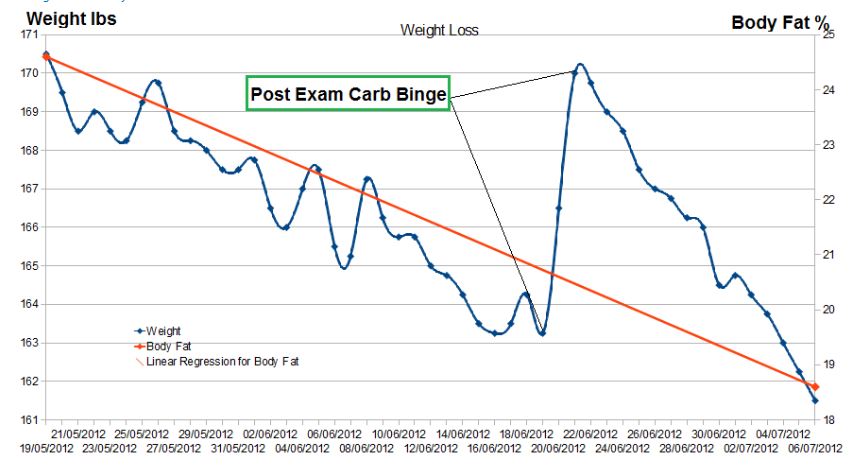 The above graph illustrates a well-written performance measure -- weight in pounds. Charting the performance measure over time made it easy for the creator of the graph to explain changes in the line over time and to identify the cause of a blip – the post-exam carb binge.
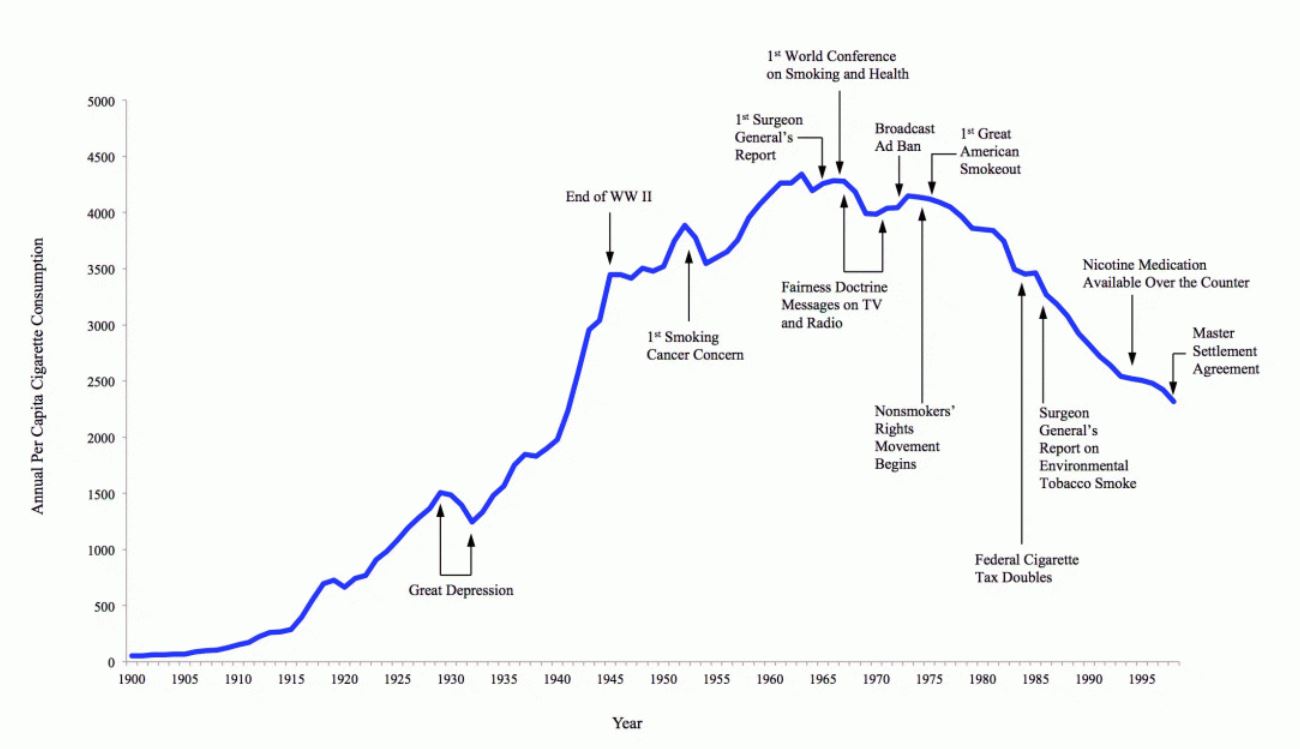
Here is another example from the Centers for Disease Control and Prevention with applications to health policy: the number of cigarettes consumed, per person. Again, arrows on the chart indicate significant historic events and policy changes that affect the trend line. The article from which this chart is taken illustrates an important use of performance measure graphs to help groups understand a problem
 A good performance measure is one that is clearly defined and that measures an important element of your programming. Below, I’ve separated performance measures into 5 types, ranging from shortest to longest in term, and from leading to lagging indicators.
| Type | Guiding Questions | Examples |
| Output Measures | How much of the service have we provided? |
# of participants enrolled # of courses offered |
| Quality Measures | How well did we do? | % of participants who reported high satisfaction % of participants who say the program meets their needs |
| Short-Term Outcome Measures | What have the participants gained immediately from the program? What have they learned? | % of participants who report that they understand how to apply to post-secondary education |
| Mid-Term Outcome Measures | What are the participants able to do now that they could not before? What changes or choices do they make? | % of participants who apply to post-secondary education |
| Long-term Outcome Measures | How are participants lives better as a result of this program? | % of participants who enroll in post-secondary education within 1 year of high school graduation |